
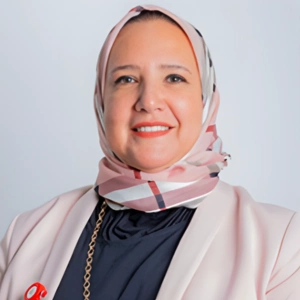
Nermine Nosseir
Gulf Medical University, United Arab EmiratesPresentation Title:
Burnout, Self-Efficacy and Contributing Factors: A Cross-Sectional Study Among Medical Students In GMU
Abstract
Burnout is recognized by the World Health Organization as an occupational phenomenon characterized by a triad of emotional exhaustion, cynicism or depersonalization, and diminished professional efficacy (World Health Organization, 2019). Medical education is known for its intensity and demands, placing students under considerable emotional and cognitive stress. It has become a very complex system that has been rapidly changing, and medical students are currently at high risk of burning out while trying to adapt to the continuous changing policies and demands placed on them by their preceptors, professors, and themselves.
The study aimed to investigate the prevalence of burnout and the associated factors and its correlation with self-efficacy among medical students at Gulf Medical University (GMU). A cross-sectional study was done, a sample of 345 students from all academic years in Gulf Medical University was approached. Data collection was conducted through an online questionnaire based on the Maslach Burnout Inventory Student Survey (MBI-SS), the General Self-Efficacy Scale (GSE) was used to measure the level of self-efficacy. The (MBI-SS) measured three subscales: emotional exhaustion, Cynicism, and professional efficacy.
Statistical Package for the Social Sciences (SPSS) program version 24 was used for data analysis. Binary logistic regression was used to assess the association between burnout and students̓ variables, and self-efficacy. P value of a level < 0.05 considered statistically significant. The results showed that burnout affected 41.2% of medical students. Higher rates were linked to female, early academic years (1&2), engaging less in extracurricular activities and living away from the family home. The results showed a significant negative correlation between student self-efficacy and burnout. These findings underscore the importance of addressing mental health and promoting resilience to prevent burnout among medical students. Medical educators need to consider burnout among their students and build a strategy to reduce stress.
Biography
Dr. Nermine Nosseir is a distinguished academic and medical educator currently serving as Associate Professor of Anatomy and Embryology at Gulf Medical University (GMU), UAE. She is the Lead Faculty of Anatomy at GMU and the Assessment Course Director for the Master Program in Health Professions Education (MHPE). Dr. Nosseir holds a PhD in Anatomy and Embryology from Suez Canal University, Egypt, and an MSc in Leadership in Health Professions Education (LHPE) from the Royal College of Surgeons in collaboration with the University of Sharjah. With over 25 years of experience in teaching, assessment, and curriculum design, her work strongly emphasizes competency-based education and integrated curriculum development, demonstrating her commitment to preparing highly competent healthcare professionals. Throughout her career, she has held several prominent leadership roles, including Vice Dean for Community Services and Environmental Affairs and Head of the Anatomy Department at the College of Medicine, Suez University, Egypt, as well as Head of the Medical Education Unit at the Armed Forces College of Medicine (AFCM), Egypt.

Organization Location
1309 Coffeen Avenue, STE 1200, Sheridan, Wyoming 82801, USA
General Enquiry
contact@scientexconferences.com
Finance Enquiry
finance@scientexconferences.com
Call us at
: (+1) 914 387 1270