

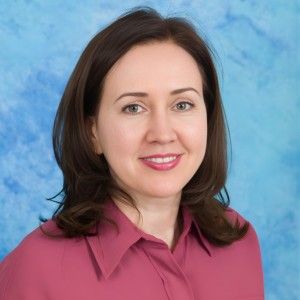
Kolenko Natalia G
MEDSI; RUDN University, Russian FederationPresentation Title:
Anogenital Psoriasis: Clinical Features and Treatment Experience
Abstract
Introduction: Diagnosis of anogenital psoriasis (AGP) is often challenging due to limited physician awareness and patient embarrassment. Moreover, the extent of lesions does not always correlate with disease severity, frequently necessitating systemic therapy.
Objective: To describe the clinical features of AGP and share our experience using netakimab monotherapy in affected patients.
Materials and Methods: Thirty-one adult patients (n = 31) with AGP were observed. Disease severity was assessed using the static Physician’s Global Assessment of Genitalia (sPGA-G) at baseline and every four weeks up to week 52. All patients received outpatient monotherapy with the interleukin-17 inhibitor netakimab at a dose of 120 mg (two subcutaneous injections of 60 mg each), administered initially, at week 1, week 2, and subsequently every four weeks for 52 weeks in total. The Dermatology Life Quality Index (DLQI) was evaluated at baseline, week 12, and week 52. Safety was assessed by monitoring adverse events and local reactions.
Results: Netakimab monotherapy demonstrated high clinical efficacy over 52 weeks. Complete clinical remission (sPGA 0) was achieved in 48.4% of patients by week 12, 67.7% by week 24, and 77.4% by week 52. DLQI scores improved 6.6-fold, reflecting a marked enhancement in patients’ quality of life. No serious adverse events or treatment discontinuations were reported.
Conclusion: Although AGP is common and significantly affects quality of life and sexual health, it remains underrecognized in clinical practice. Increased awareness among healthcare professionals and patients is essential, as individuals with AGP may seek care from specialists across multiple fields. Biological therapy with netakimab provides a promising treatment option, offering a rapid, sustained clinical response with a favorable safety profile.
Biography
TBA

Organization Location
1309 Coffeen Avenue, STE 1200, Sheridan, Wyoming 82801, USA
General Enquiry
contact@scientexconferences.com
Finance Enquiry
finance@scientexconferences.com
Call us at
: (+1) 914 387 1270